
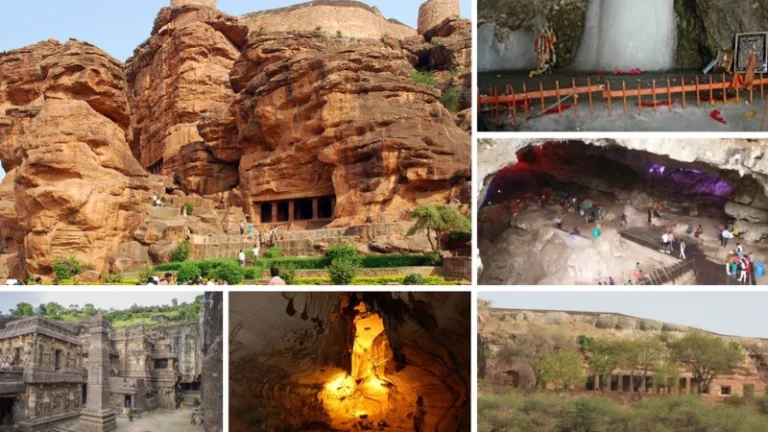
This article tells about famous Shiva cave shrines in India. You will read about Amarnath, Shivkhori, Elephanta, Kailasa at Ellora, Badami caves, Rudra Cave near Kedarnath, and Udayagiri, and many travelers also combine such spiritual journeys with chardham yatra by helicopter or Do Dham yatra by Helicopter. Each place is Hindu and linked to Lord Shiva. Shiva cave shrines are holy places in rock and caves. People come to pray. Many caves have a lingam or big carvings of Shiva. Some caves are very old. Some caves are famous for art and miracles. This article tells simple facts and travel tips about top Shiva cave shrines in India.
Quick Facts Table
Cave | State | Main thing to see | Why people visit |
Amarnath Cave | Jammu & Kashmir | Natural ice lingam | Very holy Amarnath yatra and ice lingam. |
Shivkhori Cave | Jammu & Kashmir | Natural rock lingam | Easy cave, many devotees visit year round |
Elephanta Caves | Maharashtra | Trimurti and rock sculptures | Big rock carvings of Shiva; UNESCO site. |
Kailasa Temple (Ellora) | Maharashtra | Monolithic Shiva temple | Carved from one rock; amazing work. |
Badami Cave Temples | Karnataka | Chalukya carvings including Shiva | |
Rudra Cave (Kedarnath) | Uttarakhand | Small meditation cave near Kedarnath | Quiet spot close to Kedarnath temple. |
Udayagiri Caves | Odisha | Ancient carvings and reliefs | Old rock work with many sculptures. |
Amarnath Cave, Jammu & Kashmir
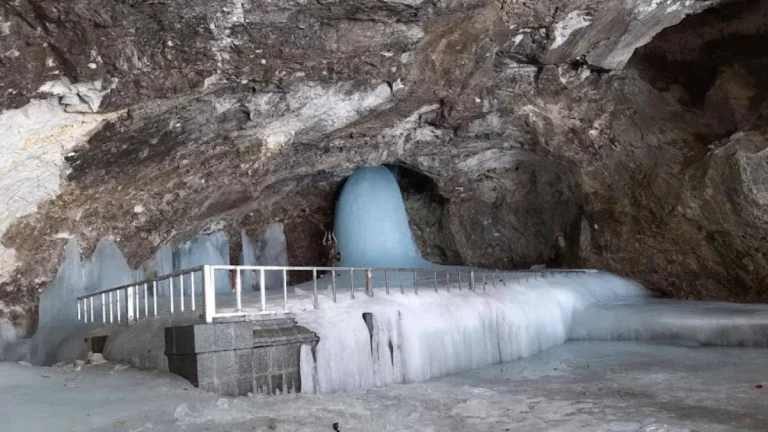
Amarnath is one of the most famous Shiva cave shrines in India. The cave sits high in the mountains. Inside, a natural ice lingam forms each year. Pilgrims walk many hours in the hills to reach it as the Shri Amarnathji Shrine Board runs the yatra and gives official news and rules. If you go, follow their rules and stay safe.
What is special? The ice lingam forms from water that freezes in the cave. People see it as Shiva. This makes Amarnath Yatra very holy. The yatra is seasonal. Check the shrine board before you travel.
Simple tips: Carry warm clothes. Walk with a guide or group. Drink water and rest. The place is hard to reach but many feel peace there.
Shivkhori Cave, Jammu & Kashmir
Shivkhori is a famous Shiva cave shrine in Reasi district. The cave has a natural rock lingam inside. Many people come from nearby towns and cities to pray. The Shivkhori Shrine Board manages the place and gives visitor details.
Why visit? The cave feels calm and holy. You can walk inside and see shapes on the walls. Devotees say the shapes show many gods. The path to the cave is not too hard. Family groups can visit.
Tips: Wear good shoes. Respect the place and the rules. The shrine board gives timings and booking info. Check the board before you go.
Elephanta Caves, Maharashtra
Elephanta Island near Mumbai has big rock caves. One group of caves shows many scenes of Lord Shiva. People come to see the Trimurti — a famous three-faced Shiva carving as Elephanta is protected and listed by UNESCO and is managed by the Archaeological Survey of India. It is both a temple site and a heritage site.
What to see: Large carved panels of Shiva and other gods. The stone work is old and very detailed. Boats go from Mumbai to the island. The site is good for a day trip.
Tips: Take a boat early. Bring water and a hat. Walk slowly; stairs can be steep. Respect the site — it is ancient and protected.
Kailasa Temple, Ellora Caves, Maharashtra
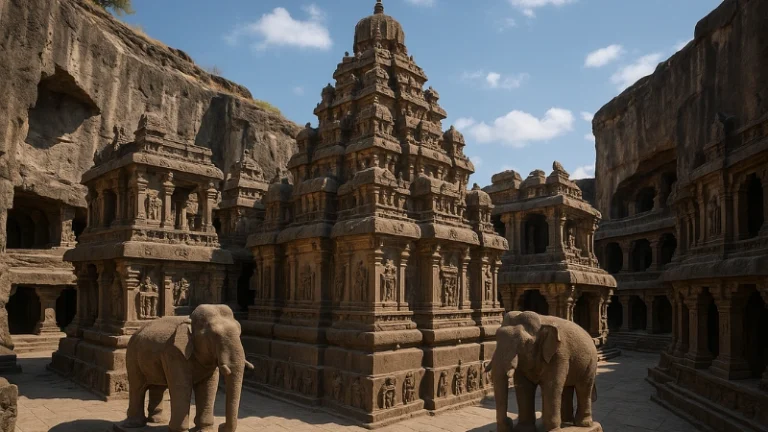
Kailasa at Ellora is one of the greatest rock temples. It is a monolithic temple. That means the builders carved the whole temple out of one rock. It is a big Shiva temple. The Ellora caves are also a UNESCO World Heritage site and are managed by ASI. Many visitors call Kailasa a wonder of stone.
Why it matters: The temple shows skill and art. The carvings tell stories of gods and kings. It stands in a big open area of many caves. A visit feels like stepping into old times.
Tips: Come in cool weather. Wear shoes you can take off at shrines. Read the plaques to learn short stories of the carvings.
Badami Cave Temples, Karnataka
Badami has four main cave temples carved on rock cliffs. These caves are from the Chalukya period. Some caves show scenes of Shiva. The carvings are fine and old. Badami stands near a small lake and old forts. The site helps us see how temple art grew in south India.
What to see: Cave halls, carved pillars, and stone reliefs. Cave three is very large. Some shrines mix Hindu, Jain, and Buddhist art. This shows the old times when many beliefs lived together.
Tips: Visit early morning or late afternoon when light is soft. Wear a hat. Read small boards that explain the cave scenes.
Rudra Cave, Kedarnath, Uttarakhand
Rudra Cave is a small cave near the Kedarnath temple. It became more known after a famous person meditated there and after it was named a meditation cave. The cave gives quiet and peace to pilgrims who come to Kedarnath. Local boards manage visits and bookings.
Why visit? It is close to Kedarnath temple and gives a calm place to sit and pray. The area is high in the mountains and has pure air. Many feel close to Shiva here.
Tips: Plan for altitude and cold. Book with the local tourism agency if needed. Respect the silence and rules of the site.
Udayagiri Caves, Odisha
Udayagiri caves are very old rock caves near Bhubaneswar as they have many carvings and old inscriptions. Some carvings show Shiva and other gods. Long ago, kings and monks used these caves. They help us learn about early Indian art and faith.
What to see: Stone reliefs, carved pillars, and old writing on rock. The caves sit on small hills and offer views of the area. You can walk the lanes and see many carved panels.
Tips: Bring water. Wear shoes for rock steps. Read the signs to learn the stories carved on the walls.
How to visit these Shiva cave shrines — simple tips
- Check official site or shrine board before you go. They give rules and dates.
- Carry light bags and water. Keep shoes, cap, and warm clothes if mountains.
- Respect the place. Do not touch fragile carvings or write on rock.
- For Amarnath and Kedarnath, health and altitude matter. See a doctor if you are unsure.
Conclusion
Shiva cave shrines are part of our faith and art. Some are places of deep prayer. Some show old stone work and stories. Each cave is different. Some sit in high cold hills. Others sit by rivers or on islands. If you visit, go with respect and quiet heart. Read the signs and follow the shrine boards so the site stays safe for many years.