
Bhimashankar Temple is a holy temple for Lord Shiva. It sits high in the green Sahyadri hills of Maharashtra. People visit to see the Bhimashankar Jyotirlinga, which is one of the 12 Jyotirlingas of Lord Shiva. The temple is in a small village. The air is clean, and birds sing. The Bhima River starts near the Bhimashankar temple. People come to pray and to enjoy the quiet hills and forest. The place is both a temple spot and a nature spot. Many families come for a short trip and for worship.
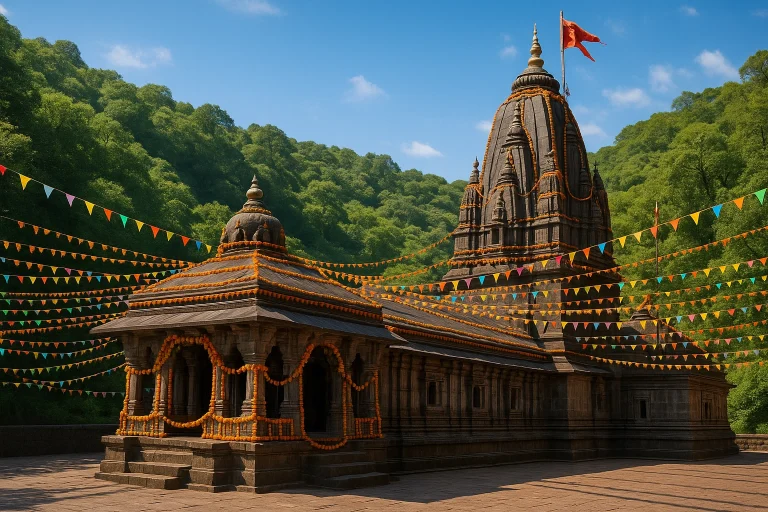
History + Architecture of the Bhimashankar Temple
History
Long ago, stories say Lord Shiva came here in the form of light. People call that a Jyotirlinga. One tale tells of a fight with a demon. Lord Shiva showed his power here. People remember that and come to pray. The name comes from the hero Bhima in old stories. The Bhimashankar Temple place grew around that story. Many pilgrims feel a deep peace here. Bhimashankar Jyotirlinga Story is a big reason people come.
Architecture and design
The Bhimashankar Temple is built of dark stone. The roof looks like a cone. It has carved stone pillars. A big Nandi (the bull) sits in front of the shrine. The main linga is kept safe in the inner room. The style is like old Hindu temples. The look is plain and strong. It fits the hills and the forest. The way the temple stands makes people feel that it has been here for a very long time.
Why the place is special
It is special for two reasons. One — it is a Jyotirlinga. Two — the area has rare trees and animals. The forest near the temple is a protected area. You can see rare squirrels and many birds. This mix of nature and faith makes Bhimashankar Mandir special.
Rituals and Daily Puja Schedule
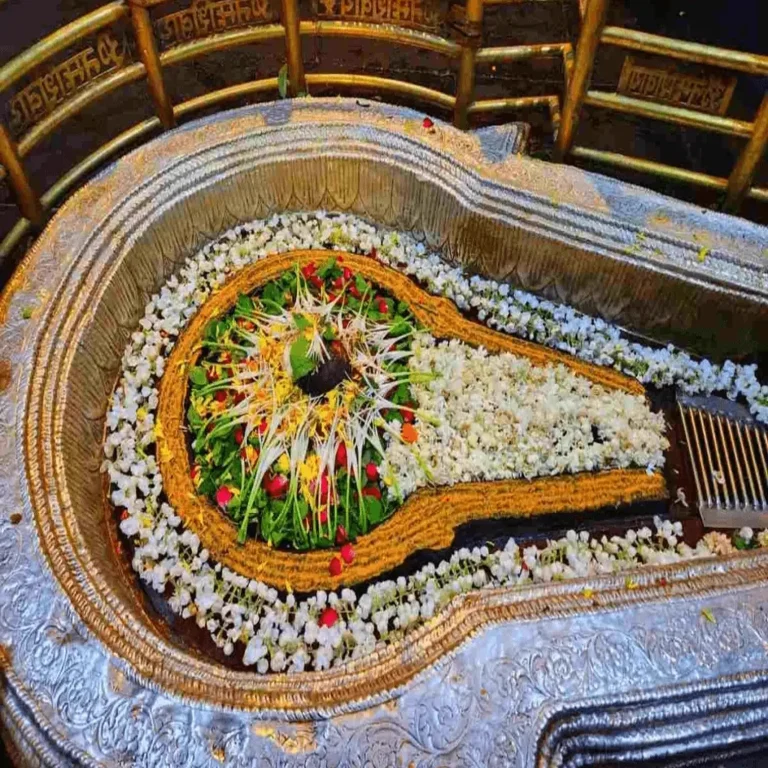
Here is the daily puja routine at Bhimashankar Temple:
- Temple opens / Kakada Aarti — about 4:30 AM. This is the first morning aarti. People come early to join.
- Nijaroopa Darshan — about 5:00 AM. This is the special darshan of the original linga. Many devotees wait for this.
- Regular Puja & Abhishek — starts around 5:30 AM and continues into the morning. Priests do abhishek and chant. Visitors have darshan through the morning.
- Naivedya / Maha Puja — about 12:00 PM (noon). Food offering is shown to the god. This is an important ritual.
- Afternoon worship — around 2:45 PM to 3:20 PM there are special worship times and short breaks for abhishek.
- Madhyan / Shringar darshan — mid-afternoon and later. Some darshans are paused for puja.
- Evening Aarti — around 7:30 PM. The temple does a closing aarti and then darshan till night. The temple normally closes around 9:00–9:30 PM.
Note: On Mahashivratri and other big days, the schedule is longer and special programs happen. Always confirm for festivals on the official site or helpline.
How to Reach Bhimashankar Temple
By Air
Nearest big airport: Pune Airport (PNQ). From Pune, the drive to the temple takes about 3 to 4 hours by car depending on road and traffic. Book a taxi or self-drive from Pune.
By Train
The nearest major railway station is Pune (many trains stop here). Some guides also list Lonavala as a railhead for parts of the route, but Pune is the most common point for pilgrims. From the station, take a taxi or bus to Bhimashankar.
By Road
Road trips come from Pune, Mumbai, Nashik or nearby towns. From Pune it is around 110–125 km by road. From Mumbai it is a longer drive (about 180–200 km). The ghats and forest roads are narrow in parts. Plan your drive and stop for rest.
Best Time to Visit Bhimashankar Temple
Season / Months | Why this is good | Who should choose this |
November to February (winter) | Cool days and clear sky. Good for walking and darshan. | Most families and first-time visitors. |
March to May (summer) | Warm days, less rain, good for short trips. | |
June to September (monsoon) | Very green forest and full waterfalls. But heavy rain and slippery roads. | |
October (post-monsoon start) | Green trees and clearer weather. Roads get better after rains. | Good for people who want fresh views and less crowd. |
Short tip: If you travel to Bhimashankar Temple in monsoon, check road news and carry rain gear. If you travel in winter, carry warm clothes for mornings and nights.
Bhimashankar Temple Nearby Attractions
- Bhimashankar Wildlife Sanctuary — Big green area next to the temple. You can see the rare Indian giant squirrel (Shekru). The forest has many birds and deer. It is good for a calm walk and nature photos. Carry water and do not make noise.
- Naneghat — An old mountain pass with views and history. It has stone paths and old carvings. Many people go for a short trek. The view from the top is wide and pretty. Good for a day trip if you have time.
- Manchar town — A nearby town with trains and small shops. People often stop here for food or to switch to local buses. It is a good place to rest on the way.
- Local view points & river origin — Walk near the hill tops to see where the Bhima River starts. The springs and small streams are calm and pretty. This spot is peaceful and nice for photos.
- Small nearby villages (like Ghodegaon) — These are calm villages with simple food and friendly people. A short walk in the villages gives a taste of local life. Try simple snacks from local stalls.
Do’s & Don’ts
Do’s
- Do reach Bhimashankar Temple early in the morning for peace and short queues.
- Do wear clean, simple clothes. Cover shoulders and knees out of respect.
- Do carry water, some snacks, and basic first-aid.
- Do keep the place clean. Carry your trash back or use bins.
- Do follow all temple rules and respect signs in the sanctuary.
Don’ts
- Don’t bring plastic bags inside. Avoid single-use plastics.
- Don’t smoke, drink alcohol, or make loud noise near the shrine.
- Don’t try to enter restricted forest or sanctuary zones. These are for wild animals.
- Don’t stand close to priests during puja or block their work. Let people move.
- Don’t drive fast on ghat roads. Many pilgrims walk and roads may be narrow.
Tips for Pilgrims
- Bring warm clothes in winter mornings and nights. The hills are cold.
- Wear good shoes for walking. The paths can be rough.
- Book a taxi early if you travel from Pune on a holiday. Cars fill fast.
- Check puja times on the temple site if you want to attend special rituals at Bhimashankar Temple.
- Carry cash for small shops. Some local stalls may not accept cards.
- Respect the forest — don’t feed animals and don’t leave food waste.
- Go early in the day to avoid crowds.
- If you have elders, plan short walking routes and rest often.
- Carry light snacks and water for kids.
Conclusion
Bhimashankar Temple is simple, calm, and very old. It is a holy place and a nature place. You will see the Bhimashankar Jyotirlinga, tall trees, and the start of the Bhima River. Walk slow. Pray with respect. Wear simple clothes. Take care on the roads. If you love birds and green hills, this place will make you happy. Plan your trip, check the puja times, and come with a calm heart.
FAQ
Q.1 Is Bhimashankar a Jyotirlinga?
Yes. It is one of the twelve Jyotirlinga sites in India. People come to visit this special linga.
Q.2 Where is the temple located?
It is in Bhimashankar village, in Khed taluka of Pune district, Maharashtra. The place is in the Sahyadri hills.
Q.3 Which airport is closest?
Pune Airport (PNQ) is the nearest big airport. From Pune you travel by road to the temple.
Q.4 How far is it from Pune?
About 110–125 km by road. The drive time depends on the road and traffic to Bhimashankar Temple.
Q.5 When is the best time to visit?
November to February are best for clear weather. Monsoon is green but can be wet and slippery.