
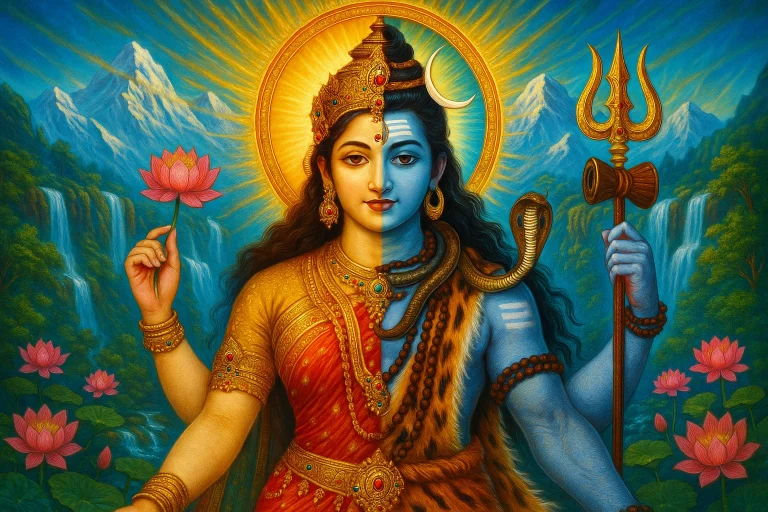
Half Shiva. Half Parvati. One body that teaches perfect balance. Here you get simple facts, official proof, travel tips, clear lists, and tables—everything in easy words.
Ardhanarishvara means “the Lord who is half woman.” It is one body split in two halves. The right side is Shiva. The left side is Parvati. This layout is the standard note on a famous Chola-period bronze in the Government Museum, Chennai.
Why this Form Matters
- Balance for daily life. We all need a strong side and a kind side. Ardhanarishvara says: keep both.
- Unity across differences. Two halves stand as one. This helps us respect people who are not like us.
- Living worship + real history.
You can see living worship at a hill temple in Tiruchengode (Tamil Nadu) and you can study old art in state museums with official labels and timings, just as spiritual journeys today also include options like chardham yatra by helicopter and Do Dham yatra by Helicopter.
Iconography Cheat-Sheet (How to Recognize It)
When you stand before a statue or bronze, use this list like a game:
- Split body: one half male, one half female.
- Jata (matted hair) & crescent moon: on the Shiva side. The Chennai bronze note says “jatamakuta with a crescent moon.” (Jata/jatamakuta = tall matted hair bun).
- Third eye: often on Shiva’s forehead. (Look closely at the face or the label.)
- Earrings: different on each side—one like Shiva’s, the other like Parvati’s. (Stone and bronze labels explain the contrast.)
- Hands (2, 3, or 4): some idols show three arms on the Shiva side in that specific bronze; the upper right hand may hold an axe (parashu); the lower right may rest on Nandi.
- Vahana (vehicle): look for Nandi the bull near the feet or in the scene. (Nandi = Shiva’s bull).
- Stance: bronzes often show a gentle tribhanga (S-curve). (Tribhanga = three-bend posture).
- Drape and ornaments: each half wears its own style. The Chennai note mentions drapery length and Shiva-side ornaments.
Tip for kids: count the hands, point to the moon, find Nandi.
Trusted Timeline (With Where to See Today)
- Early centuries CE (North India context).
The Government Museum, Mathura explains its strength in Kushan and Gupta sculpture. This shows how early Indian art formed the base for later icons. If you want to study early styles, Mathura is a great start. (Check official timing below.) - 10th century CE (Tamil Nadu, stone).
A stone Ardhanarishvara from the Virudhagireeswarar Temple, Vriddhachalam is listed as a retrieved artefact on the Indian Culture Portal (Ministry of Culture). The page gives origin and century, and tells the heritage story. This is firm, official proof of age and worship. - 11th century CE (Chola bronze).
The Government Museum, Chennai hosts a Chola-period Ardhanarisvara from Tiruvenkadu, Thanjavur District. The official object note is clear: right = Shiva, left = Parvati, moon in hair, axe in upper right hand, lower right hand on Nandi, drapery to the knee, and the stance. This one page is a gold standard for learning the signs. - Living worship today (Tamil Nadu, hill temple).
The Arthanareeswarar Temple at Tiruchengode is an active shrine on a hill in Namakkal district. The official district page confirms the hill setting and the half-male, half-female deity form. (For exact step count or hill height, always check official pages; if not listed there, do not guess.)
Where to Experience It (Official Only)
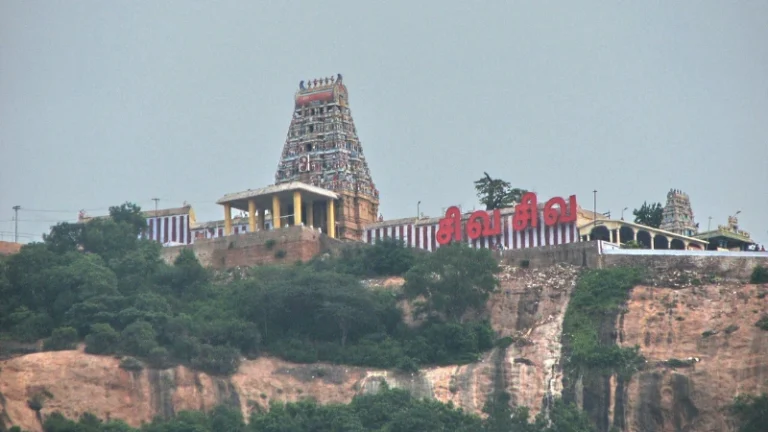
1) Arulmigu Arthanareeswarar Temple, Tiruchengode (Tamil Nadu)
- What: A living, hill-top temple with the half-Shiva, half-Parvati form as the main deity.
- Why go: To see daily worship of the idea “two energies, one life.”
- Official confirmation: Namakkal District government page describes the shrine and the composite form. (Use this page when you need a government reference for the hill temple.)
2) Government Museum, Chennai (Tamil Nadu)
- What: A major state museum with world-famous South Indian bronzes and rich stone galleries.
- Ardhanarishvara highlight: The Chola bronze from Tiruvenkadu with a very clear icon note (sides, moon, axe, Nandi, drape).
- Why go: One visit can teach you the whole icon in minutes because the label is explicit.
3) Government Museum, Mathura (Uttar Pradesh)
- What: A state museum famous for Kushan/Gupta sculpture—great for early North Indian context.
- Hours (official): 10:30 AM – 4:30 PM; Monday closed (UP Tourism and the museum’s own site note these times). (Policies can change; re-check before travel.)
Read a statue in 7 steps (works in any museum or temple)
- Find the center split.
- Check the right side for Shiva signs: jata + crescent moon, third eye.
- Check the left side for Parvati signs: feminine earring, softer drape.
- Count the hands. Look for the axe.
- Find Nandi the bull.
- Notice the stance (often tribhanga in bronzes).
- Read the object label: date, place, notes.
Quick Facts
Topic | Simple answer |
Name | Ardhanarishvara (also Ardhanareeswara / Ardhanarisvara) |
Meaning | “Half-woman Lord”: Shiva + Parvati in one body |
Standard sides | Right = Shiva, Left = Parvati (museum note) |
What it teaches | Balance and unity of two energies |
Where to see (temple) | Arthanareeswarar, Tiruchengode (Namakkal district official page) |
Where to study (museum) | Government Museum, Chennai (clear icon note); Government Museum, Mathura (early sculpture context) |
Old evidence (official) | 10th-century stone idol from Vriddhachalam (retrieved artefact record) |
Deep-Dive Learning
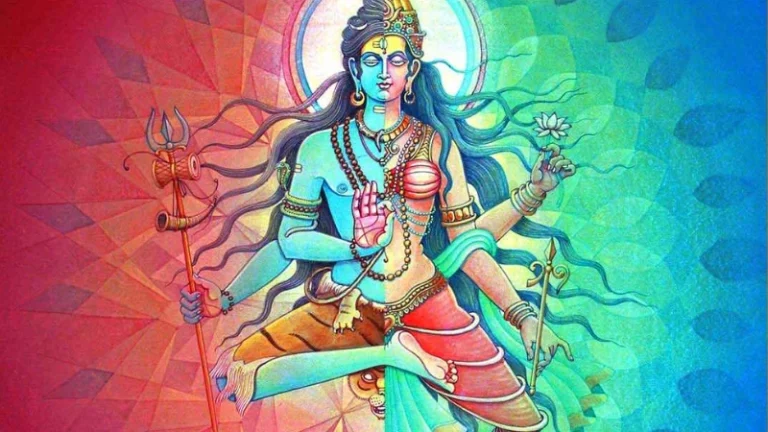
1) How labels help you “see” like a curator
Many people look at a bronze and miss the signs. The Chennai Ardhanarisvara label solves this. It lists the sides (Shiva/Parvati), the moon, the axe, the hand on Nandi, the drape, and the bent leg. Read the note first. Then look at the bronze. Say the signs out loud as you see them. This is how curators and students train their eyes.
2) Early sculpture context in Mathura (why it matters)
The Mathura museum is important for Kushan and Gupta art. This helps you understand early standards of body shape, drape, and posture that later icon makers used across India. Knowing this context makes the Chola bronze in Chennai easier to read. (Bring a small notebook and write one new word: “tribhanga.”)
3) Heritage protection and the “retrieved artefact” record
The Indian Culture Portal keeps a public log of retrieved artefacts. The entry for Ardhanarishvara from Vriddhachalam shows how the government tracks age, origin, and recovery. It is not just a story; it is a record with temple name and century. This proves that the form has deep roots and that the state treats it as important heritage.
Simple Glossary
- Jata/Jatamakuta: Shiva’s high, matted hair with a crescent moon. (See Chennai label.)
- Nandi: The bull, Shiva’s vehicle; look for the right hand resting on Nandi in the bronze.
- Abhaya: No-fear hand sign. Some images show it. (Check the museum label for gestures.)
- Tribhanga: A gentle S-curve of the body seen in Indian sculpture, very common in bronzes.
- HR&CE: Hindu Religious & Charitable Endowments Department, Tamil Nadu (the department that administers many temples). (Use district or HR&CE pages for official temple notes.)
Practical Do’s & Don’ts (Temple + Museum etiquette)
Do
- Dress modestly in temples.
- Read the label first in museums, then look for each sign.
- Check official pages for timings and holidays before travel. (For Mathura, use UP Tourism and the museum site.)
Don’t
- Don’t touch the icons or lean on pedestals.
- Don’t use flash if rules say no.
- Don’t claim numbers (steps, height) unless you see them on an official government page on the day you plan to go. (District page confirms hill temple, not a number.)
One-Page Summary
- Meaning: Ardhanarishvara = Shiva + Parvati in one body.
- Standard sides: Right = Shiva, Left = Parvati. (Government Museum Chennai note.)
- Key signs: jata + crescent moon, third eye, axe, Nandi, tribhanga stance. (Museum labels.)
- Old evidence: 10th-century stone from Vriddhachalam, recorded as a retrieved artefact by Ministry of Culture.
- See it live: Tiruchengode hill temple (official district page confirms site and deity). (Quote numbers only if listed on government pages.)
- Study it in museums: Chennai (clear icon note). Mathura (early sculpture; 10:30–4:30; Monday closed, per UP Tourism and UP Museum).
FAQ
Q.1 Is the right side always Shiva?
Yes. The Chennai museum note states right = Shiva, left = Parvati for that classic bronze. This is the usual standard in museum labels.
Q.2 How many arms are “correct”?
There is no single number. In the Chennai bronze, Shiva’s side shows three arms in that piece; other images can show two, three, or four. Read the label each time.
Q.3 What signs should I look for first?
Crescent moon in the hair, third eye, axe, and Nandi. These are named on the official object page.
Q.4 Is there official proof of old idols?
Yes. The Indian Culture Portal records a 10th-century Ardhanarishvara from Vriddhachalam (retrieved artefact), with origin and period.
Q.5 Which temple should I visit?
The Tiruchengode hill temple is a key shrine, listed by the Namakkal district website as a major site with the half-male, half-female form.
Q.6 Where can I learn fast from labels?
Government Museum, Chennai. The Ardhanarisvara bronze label is very clear and student-friendly.