
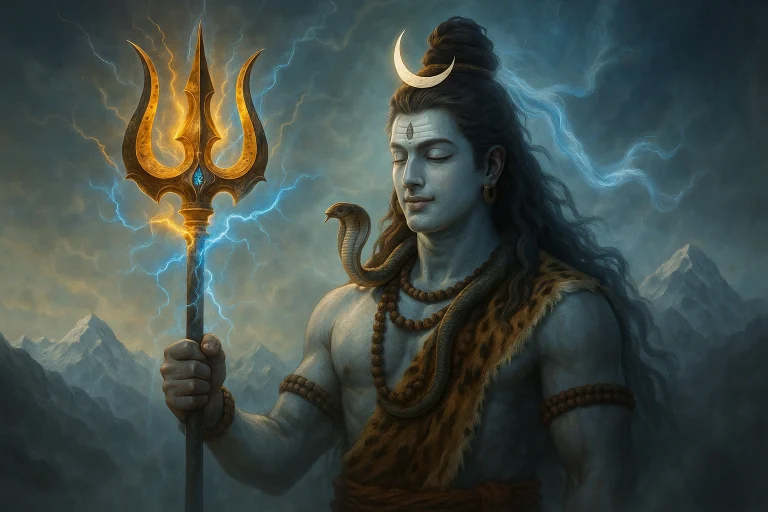
Shiva Trishul is Lord Shiva’s three-pointed trident. It stands for three things — like create, hold, and end — and for three minds and three times. People see it in temples, art, and stories, just as they come across sacred journeys like chardham yatra by helicopter and Do Dham yatra by Helicopter while exploring spiritual traditions. It guides worship and shows power, balance, and calm.
This page answers all small and big questions about Shiva Trishul. You will learn about: what it is, where it came from, what it means, how people use it, and why it still matters today. It checked old stories and trusted pages so facts match the books.
What is Shiva Trishul?
- A Trishul is a three-pointed spear.
- Shiva holds it in many pictures.
- It is a holy sign for many people in India.
- Sometimes it has a small drum (damru) tied to it.
Simple table: Quick facts
Item | Easy words |
Name | Shiva Trishul (trident) |
Shape | Three points on one stick |
Held by | Lord Shiva |
Close sign | Damru (small drum) |
Seen at | Temples, homes, art |
History and Origin of Shiva Trishul
Old books tell how the Trishul came to be. One story says the craftsman god Vishvakarma made it. He made many gods’ tools from the sun’s light. He gave the trident to Shiva. This tale is in the Puranas, old Hindu books. Other books say Shiva had a trident from the start. Stories show the trident used in big tales. For example, it is part of the story where Ganesha was cut and later fixed. These stories come from the Skanda and Shiva Puranas.
Symbolism of Shiva Trishul
The Trishul is full of small meanings. Here are the easy ones:
- Three points — They mean three main things. People say: create, keep, and end. Or past, now, and future. Or the three gunas (types) of nature: sattva, rajas, tamas.
- A sign of power — It shows Shiva can stop bad things.
- A sign of balance — Shiva holds all three sides together.
- A sign of mind — It shows the three states: awake, dream, deep sleep.
Importance of Shiva Trishul in Hindu Worship
People offer Trishuls at many Shiva shrines. They tie red threads or flowers on them. Devotees place small metal tridents as signs of hope and protection. Big temples sometimes have a large Trishul near the gate. Bel leaves (Bilva/Bel Patra) are offered to Shiva. The leaf has three parts and links to the trident idea. People believe offering the right leaf brings blessings. News and temple guides explain why Bel leaves and tridents go together in worship.
How people use a Trishul when they pray
- They place it by the lingam or idol.
- They tie cloth, threads, or bells.
- They touch it with respect or say a short prayer.
Shiva Trishul in Art, Culture, and Festivals
You can see the trident in many places:
- Art & sculpture — Old temple carvings show Shiva with his trident.
- Paintings & posters — Many artists paint Shiva holding the Trishul and damru.
- Festivals — During Maha Shivratri and other days, people bring tridents to the temple. Big Trishuls are put up in public places during festivals.
Table — Where Trishul appears in culture
Place | How it shows |
Temples | On top of walls, near doors |
Homes | Small brass tridents for prayer |
Festivals | Giant tridents, processions |
Art | Paintings, posters, rangoli designs |
Short note: The trident is not only a weapon. It is a sign that teaches. Artists use it to show calm power, not fear.
Modern Relevance of Shiva Trishul
Today people wear tiny tridents as pendants. Shops sell small brass tridents for home prayer. Devotees also place big tridents in public spaces to show faith. Trishul is used in yoga groups and in spiritual talks to teach balance. People sometimes use the trident symbol in logos and art. They do this to show hope, strength, and calm. For many young people, the trident still asks the same question: “How can I stay balanced?” The Trishul says: keep body, mind, and soul in tune.
Small Visual: Trishul meanings at a glance
Trishul part | Easy meaning |
Left point | One role (e.g., create) |
Middle point | One role (e.g., keep) |
Right point | One role (e.g., end) |
Stick | The base or the soul that holds them |
Conclusion
Shiva Trishul is simple to see but deep to learn. It is not just a tool—it is a teacher. The three points teach balance, and the trident shows calm power. People still hold it close in temples, homes, art, and festivals. Legends from Shiv Khori say that devotees who meditate near the sacred cave feel the energy of Lord Shiva’s trident guiding them toward inner peace. Many pilgrims even leave small offerings near Trishul symbols, believing it brings strength and harmony.