
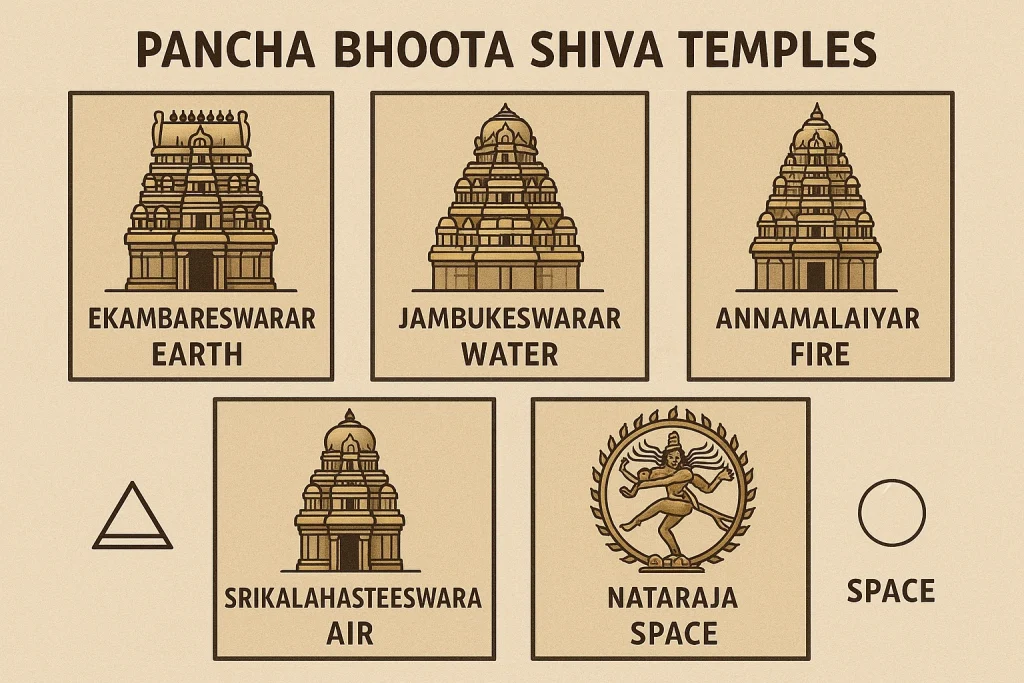
Pancha Bhoota Shiva temples are five old temples in south India. Each temple shows one of the five great elements — earth, water, fire, air, and sky. People visit to pray, learn, and feel calm. This guide tells you what each temple means, where to go, what to see, and tips for a safe family visit.
What are the Pancha Bhoota Shiva Temples?
Pancha means five. Bhoota means elements. These temples are named after the five natural elements. Each temple has Lord Shiva as the main god. Each one is special for one element: earth, water, fire, air, and sky. People have worshiped these places for many old years. They are in the south of India. Visiting them is like visiting the five faces of nature.
The Five Temples
Earth — Ekambareswarar Temple, Kanchipuram
This temple stands for earth. People call the god here Ekambareswarar or Ekambaranathar. The temple is very old. It has big halls and tall towers. There is a very old mango tree inside the temple. People say Parvati once worshipped here under that tree. The temple shows earth’s steady, warm nature. If you visit, you will see carved pillars and wide halls. The site is cared for by the state temple board and is also listed by India’s tourism site.
What to see
- The big gopuram (entrance tower).
- The ancient mango tree and its shrine.
- Stone carvings and long halls where people walk and pray.
Why people love it
- It feels calm and steady.
- It is easy for families to walk around.
- Story links to old poems and saints.
Water — Jambukeswarar Temple, Thiruvanaikaval
This temple stands for water. Shiva is worshipped as Jambukeswarar. There is a big water tank and small ponds around the temple. The inner shrine is close to water under a tree called the Jambu tree. The priests perform a special noon ritual here that many people come to see. The temple has many old stories and is part of the local temple board pages.
What to see
- The temple tank and green trees.
- The special noon pooja where the priest honors Shiva in a unique way.
- Old stone work and music in festivals.
Good for families
- Calm place for children to learn about nature and faith.
- Easy entry and clear paths for walking.
Fire — Arunachaleswarar / Annamalaiyar Temple, Thiruvannamalai
This temple stands for fire. Shiva here is called Annamalaiyar or Arunachaleswarar. The temple sits at the foot of a sacred hill called Arunachala. People walk around this hill as a form of prayer. A famous festival lights a big lamp on the hill that many people see from far away. This temple is large and full of old stories and halls. The town and temple are closely linked.
What to see
- The long walk around Arunachala hill (called Girivalam).
- Tall stone towers and a thousand-pillared hall.
- The big festival lamp (Karthigai Deepam) in season.
Tips
- Wear good shoes for the hill walk.
- The area can be sunny, so carry water and a hat.
Air — Sri Kalahasti Temple, Srikalahasti
This temple stands for air or wind. Shiva is worshipped as Kalahasteeswara. The temple sits near a river and old town. People say the god here moves like the wind. Many old poems and stories talk of this place. The temple site gives history and special puja details. Pilgrims come for peace and for some special planetary rituals too.
What to see
- Simple, calm corners where the wind blows through halls.
- The old temple tank and quiet courtyards.
- Rituals for people who want special blessings.
Good for family
- Quiet place for older people to sit and relax.
- Easy paths, but check for steps near the shrines.
Sky / Ether — Thillai Nataraja Temple, Chidambaram
This temple stands for the sky or space element. Shiva is shown here as the dancing god Nataraja. The temple is very old and has fine carving work. It is famous for the 108 dance poses carved on the tower walls. The inner shrine has a special nature and is veiled in ritual. People say this place links art, music, dance, and worship. The local temple site and many history pages explain its art and age.
What to see
- Carved gopurams with many tiny figures.
- The big pond in front of the temple.
- Dance and music events at festival time.
Family note
- Children like the carvings and the big open spaces.
- The place holds many stories you can tell kids as short tales.
Simple Travel Tips for Visiting Pancha Bhoota Shiva Temples
- Plan one temple per day. Do not rush.
- Wear light clothes and shoes you can walk in.
- Carry water, small snacks, and a first-aid kit.
- If you travel with elders, check if the temple has ramps or help for stairs.
- Respect temple rules: take off shoes where asked and follow dress codes.
- Ask the temple office about darshan times and special poojas. Many temples have official pages with this info.
Festivals and Rituals — What to See and When
Each temple has festivals that draw big crowds. The fire temple at Thiruvannamalai has the big lamp festival. Chidambaram holds dance and art events. Jambukeswarar has the famous noon ritual. Ekambareswarar and Srikalahasti have their own yearly programs. If you want to see a festival, check the temple website or local tourism pages before you go. Plan early, and book stay close by. Visiting during these times makes the Pancha Bhoota Shiva Temples experience even more special.
Final thoughts
Pancha Bhoota Shiva temples are simple and deep at the same time. They teach us about nature through stone, water, flame, wind, and sky. Walk slowly. Listen to small stories. Ask family members what they feel at each site. As you explore these sacred places, also learn about the 19 Powerful Avatars of Lord Shiva You Must Know, each reflecting a unique aspect of nature and divine energy.
FAQs
Q: Are the Pancha Bhoota Shiva Temples far from each other?
A: They are in different towns in south India. You need more than one trip to see all five.
Q: Can family with small kids visit easily?
A: Yes. Most places have clear paths. Take rest breaks and keep water.
Q: Should I book darshan online?
A: Some temples offer online booking for special pujas. Check the temple’s official page.