

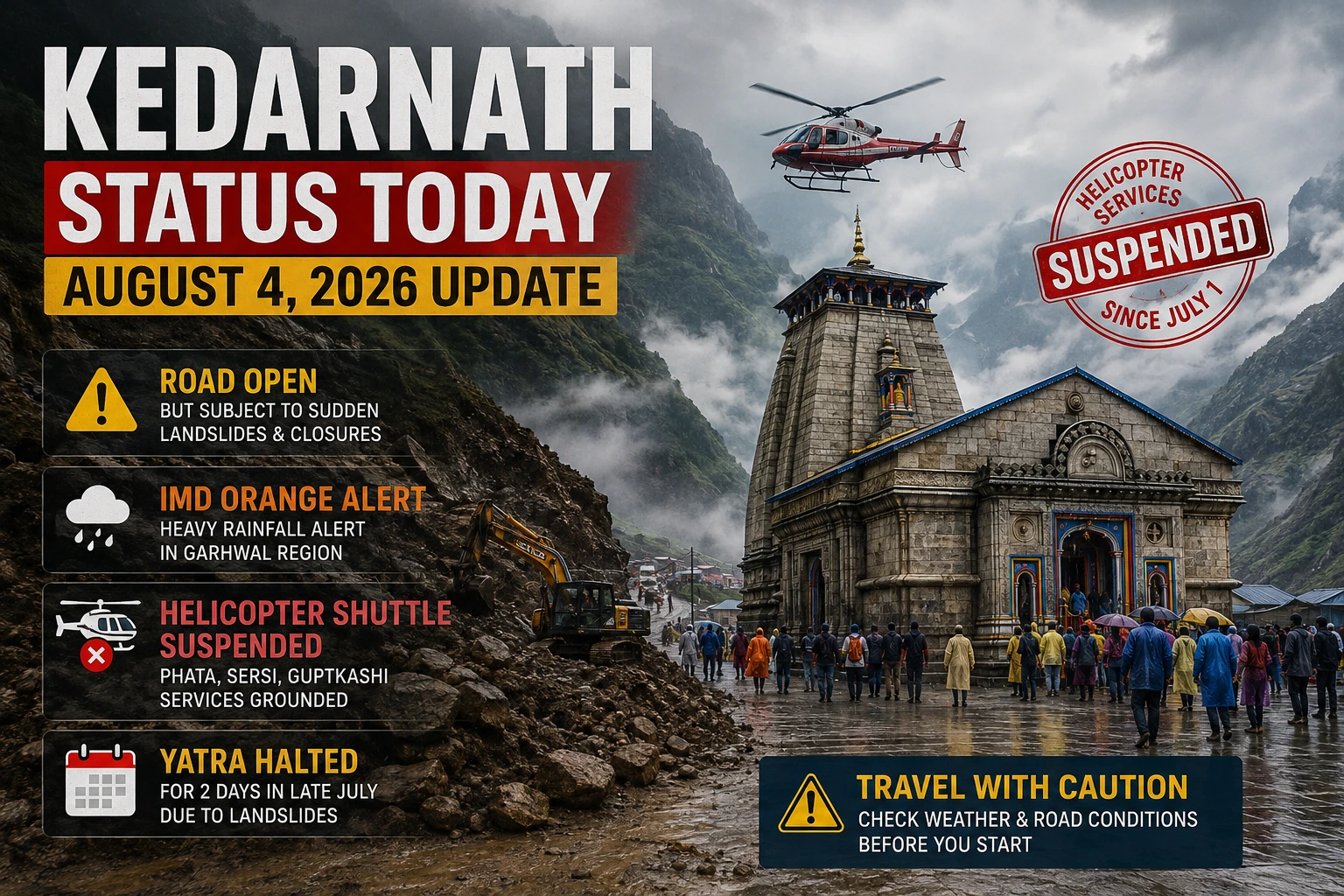
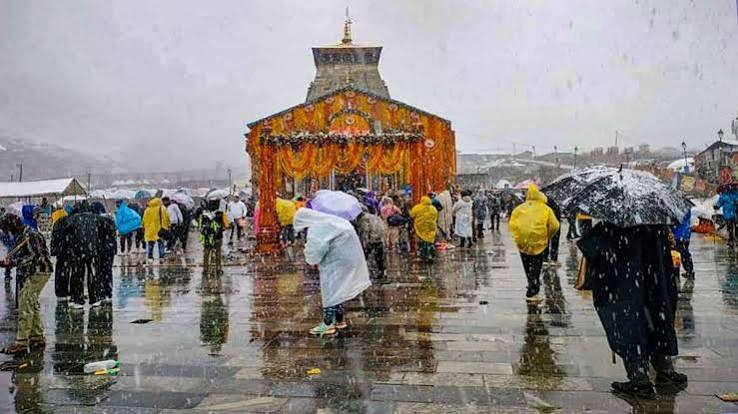
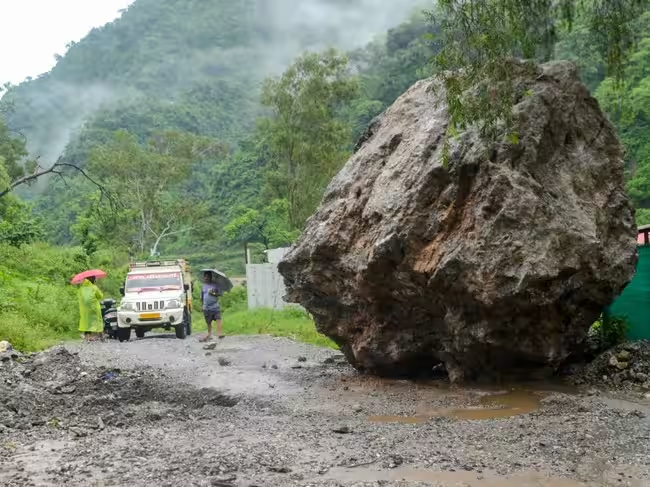
“They say Baba Kedarnath calls you only when he wishes to.” That’s how every Kedarnath journey begins — not with a plan, but with a calling. If you’re thinking about doing the Kedarnath Yatra by helicopter in 2026, this guide walks you through the entire journey, step by step, based on a real heli-yatra experience — from Dehradun to the sacred shrine in the lap of the Himalayas and back.
Why Choose the Helicopter Route to Kedarnath
The traditional trek to Kedarnath Temple covers roughly 16-18 km on foot from Gaurikund and can take a full day or more, depending on fitness and weather. For elderly pilgrims, families with children, or anyone short on time, the helicopter route compresses that same journey into a 7-minute flight, offering a faster, more comfortable way to reach Baba Kedarnath’s abode without compromising on the spiritual experience.
If Kedarnath is just one stop on your itinerary, it’s worth exploring the Do Dham Yatra by Helicopter (Kedarnath + Badrinath) or the full Char Dham Yatra by Helicopter covering Yamunotri, Gangotri, Kedarnath, and Badrinath in one seamless trip.
Getting There: Dehradun as Your Starting Point
Almost every Kedarnath heli-yatra begins in Dehradun, the capital of Uttarakhand.
- By air: Jolly Grant Airport, Dehradun, is the nearest airport and the most common entry point for pilgrims arriving from across India.
- By train: Haridwar, Rishikesh, and Dehradun railway stations are all well connected and easy to reach.
For a full breakdown of routes, road distances, and connecting transport, check out this detailed guide on How to Reach Kedarnath.
One important reminder before you set out: complete your yatra registration before beginning the journey — this is mandatory for all pilgrims heading to Kedarnath.
From Dehradun, the road journey winds through the hills, passing through Devprayag, the sacred confluence where the Bhagirathi and Alaknanda rivers meet to form the Ganga. Many pilgrims stop here to pay their respects before continuing onward. Further along the route lies the temple of Maa Dhari Devi, revered as the guardian deity of the Char Dham yatra — a customary stop for blessings before the mountains truly begin.
The Three Helicopter Base Points
There are three main base points from which helicopter services operate to Kedarnath:
- Guptkashi
- Phata
- Sirsi
Most pilgrims prefer flying from Sirsi, and for good reason — it typically offers the cheapest heli tickets among the three. Here’s how the three compare:
| Base Point | Distance to Cover by Road | Flight Cost | Flight Time |
|---|---|---|---|
| Guptkashi | Shortest drive | Highest | Longer |
| Phata | Midway | Moderate | Moderate |
| Sirsi | Longest drive | Lowest | Shortest (7 minutes) |
If minimizing drive time matters most to you, Guptkashi works better — but expect a higher fare and longer flight time. If cost and a shorter flight matter more, Sirsi is the popular choice.
Reputed operator like Leisure India Holidays run frequent services from these points, with departures roughly every 10–12 minutes when weather conditions are clear.
A Night Before the Flight
Most yatra itineraries have pilgrims arrive at the base point (say, Sirsi) by evening and rest overnight before an early morning flight. This is also when your operator typically briefs you on the next day’s process — reporting time, weight checks, security checks, and helicopter boarding points.
Practical tip: When booking your stay near the helipad, choose accommodation as close to the helipad as possible. Being able to walk to boarding in a minute or two saves a lot of stress on flight day, especially with elderly family members or heavy luggage. Browse options in this guide to Hotels in Kedarnath to plan your stay in advance.
Weather can also make or break your trip, so it’s worth checking the latest Weather in Kedarnath before you finalize your dates — temperatures and rainfall can shift quickly in the valley.
Flight Day: What to Expect
Flight day begins early, right after sunrise, once weather clearance comes through. Here’s the general flow:
- Report to the passenger lounge at your assigned time.
- Ticket verification — your booking is checked and confirmed.
- Body weight and luggage weight check — this is a mandatory step before boarding.
- Boarding as per your allotted slot.
Baggage and Weight Rules
This is one of the most important practical details for the Kedarnath heli-yatra:
- Luggage limit: Around 5 kg per passenger is typically allowed free.
- Excess luggage charge: Approximately ₹150 per kg for luggage beyond the free limit.
- Excess body weight charge: If your body weight exceeds the ticketed limit by up to 5 kg, a similar rate of around ₹150 per kg may apply, subject to operator discretion and availability.
Families traveling together should note that if a member’s weight varies slightly, operators may adjust seating across different helicopters rather than delaying the whole group — it’s a routine practical arrangement, not a “big deal.”
Wheelchair Facility
For elderly or differently-abled pilgrims who cannot walk from the helipad to the helicopter, a wheelchair facility is available — but you need to specifically mention this requirement in advance when booking.
The Flight: 7 Minutes to Devotion
The flight itself is short — around 7 minutes — but it’s often described as one of the most moving parts of the entire yatra. As the helicopter climbs, the Kedar Valley opens up in full grandeur, and as the temple comes into view during landing, many pilgrims say it feels like time stands still.
Same-Day Return vs. Next-Day Return
This is a decision worth making carefully at the time of booking:
- Same-day return: You get only about 3–4 hours at Kedarnath before you must fly back down.
- Next-day return: You get a full overnight stay in the Kedar Valley, allowing for a relaxed darshan, the evening aarti, and even a special night darshan if you have the appropriate ticket.
Recommendation: A next-day return is almost always the better choice if your schedule allows it, since it gives you meaningful time at the shrine rather than a rushed visit.
Darshan Timings and Special Pooja
The temple typically closes for a couple of hours around midday (roughly 12 PM to 2 PM) and reopens for Shringar Darshan in the afternoon (around 2 PM to 5 PM).
For pilgrims wanting a more unhurried, personal experience, a Special Pooja / VIP darshan ticket is available:
- Cost: Approximately ₹7,500
- Timing: Typically conducted late at night, around 12 AM to 4 AM
- Booking: Available through the official BKTC (Badrinath-Kedarnath Temple Committee) website, or offline at the counter, which usually opens around 5 PM
Pilgrims who take this route often describe getting significantly more time inside the sanctum — sometimes 5 to 7 minutes of unhurried darshan — compared to the general queue.
Beyond the Temple: What Else to See
If you’re staying overnight, make time for these nearby sacred spots:
- Bhimshila — the massive rock that famously diverted the 2013 flash-flood debris around the temple, protecting it from destruction. Standing beside it and hearing the story is a humbling experience.
- Adi Shankaracharya’s Samadhi — located just behind the main temple.
- Bhukund Bhairav Temple — regarded as the guardian deity of Kedarnath; visiting early morning here means minimal crowds and a peaceful darshan.
Visiting these spots early in the morning, before the crowds build up, is highly recommended — you’ll often find yourself nearly alone at these sites. For the full list of nearby shrines and viewpoints worth your time, see Places to Visit in Kedarnath.
The Return Journey and Onward Stops
After flying back down to your base point, many itineraries include a visit to Triyuginarayan Temple, believed to be the site where Lord Shiva and Goddess Parvati were married. The temple is known for its Akhand Dhuni — a sacred fire said to have been burning continuously for ages. Many couples travel here to solemnize their own weddings at this revered site.
From there, pilgrims typically head back toward Dehradun, often stopping once more at Maa Dhari Devi’s temple. Interestingly, devotees believe her divine form changes through the day — appearing child-like in the morning, as a young woman by afternoon, and as an elderly woman by night, visible through subtle changes in her facial features.
Best Time to Book: 2026 Season
Helicopter bookings for Kedarnath typically run in phases through the yatra season (roughly May to October, weather permitting). If the first phase of bookings for a season is already closed, a second phase (commonly around September–October) often opens up — a good window to plan a less crowded, cooler-weather visit.
Since the shrine only stays open for a fixed window each year, plan around the official Kedarnath Opening Dates and Kedarnath Closing Dates before you lock in your travel dates or helicopter tickets.
Quick Planning Checklist
- ✅ Complete online yatra registration before travel
- ✅ Choose your base point (Sirsi for lowest cost, Guptkashi for shortest drive)
- ✅ Book next-day return over same-day if possible
- ✅ Pack light — stay within the 5 kg luggage limit to avoid extra charges
- ✅ Book accommodation close to the helipad
- ✅ Mention wheelchair requirements in advance, if needed
- ✅ Carry warm clothing — temperatures in the Kedar Valley can drop sharply, especially after rain
- ✅ Consider the Special Pooja ticket for a longer, more peaceful darshan
Final Thoughts
A Kedarnath Yatra by helicopter isn’t just about saving time — it’s about making this sacred journey accessible to families, elders, and anyone whose body may not allow for the traditional trek, without losing any of its emotional and spiritual depth. Whether it’s your first visit or a return pilgrimage, the moment the temple comes into view from the sky is something words rarely do justice to.
If Kedarnath has stirred a bigger dream of visiting all four Himalayan shrines, explore the Char Dham Yatra by Helicopter package, or browse Kedarnath Pictures for a glimpse of what awaits before you go.
Har Har Mahadev. Jai Shri Kedar.